CS50, Harvard’s introductory computer science course, is the most influential class I’ve ever taken. CS50 spurred my interest in computer science – which I nearly pursued as my career – and the methodologies of computer science continue to inform my understanding of the world and guide my decisions to this day.
The Cult of CS50
I was reminded of this because the New Yorker recently published a profile on David Malan, CS50’s charismatic and innovative professor (and my boss at one point!). Even though much of the interview focuses on Malan’s pioneering work in digital-friendly education with high production value, the article also captures some of Malan’s quirks, like his antiquated speaking habits (he says “lest” a lot) and his Jobs-esque wardrobe, and it took me back to my time at Harvard. When I took it in 2009, CS50 was more cult than ordinary Harvard course, garnering a class size approaching 700, meaning nearly half of Harvard undergrads take it. It held enormous events like an overnight hackathon and a project exhibition fair, replete with corporate sponsors such as Google, Facebook, and Dropbox. CS50 even has its own branding and swag! I still wear my “I took CS50” t-shirt and CS50 hoodie; in fact, a Harvard alum wearing a crimson H hat commented on my CS50 shirt in Trader Joe’s the other day.
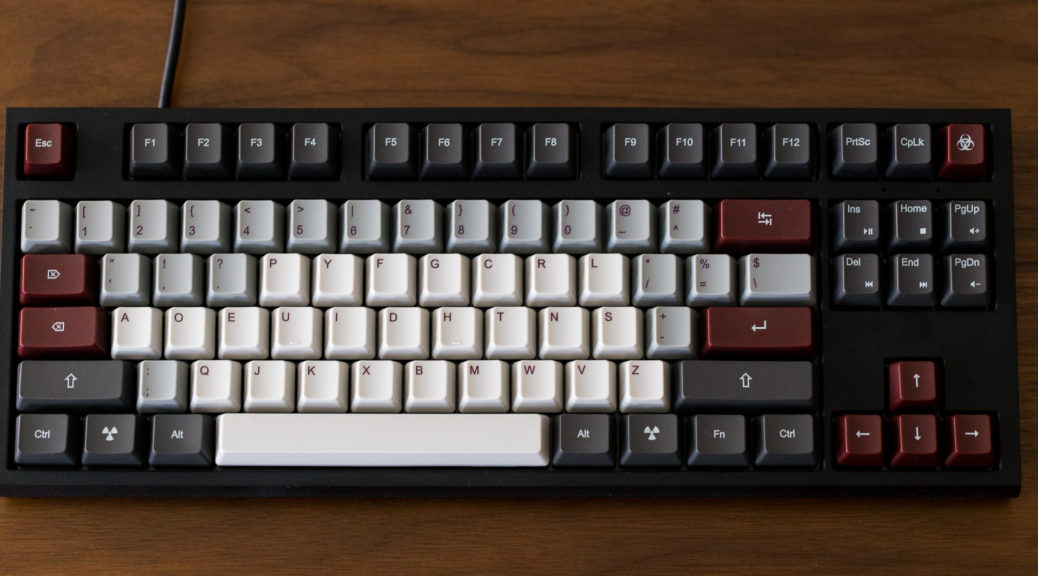
At home, I type in a strange custom keyboard layout that’s almost certainly unique (see above). The alphanumeric layout is Dvorak, but I’ve remapped most of the symbols and modifiers. Notably, CapsLock is Backspace, Backspace is Tab, Tab is Delete, and Delete was CapsLock. Punctuation is moved so ? and ! are with . and ,. Many changes are optimized for coding, such as moving brackets, braces, and the logical operands & and | to more accessible spots. I designed the layout in 2011 (and stopped coding in 2013, lol), but since then I’ve typed on it from memory on a normal Qwerty keyboard. I just finally bought a custom-printed keyboard to reflect my own layout, but not after strongly considering fully switching back to Qwerty. Let’s review the results of my protracted keyboard design experiment.
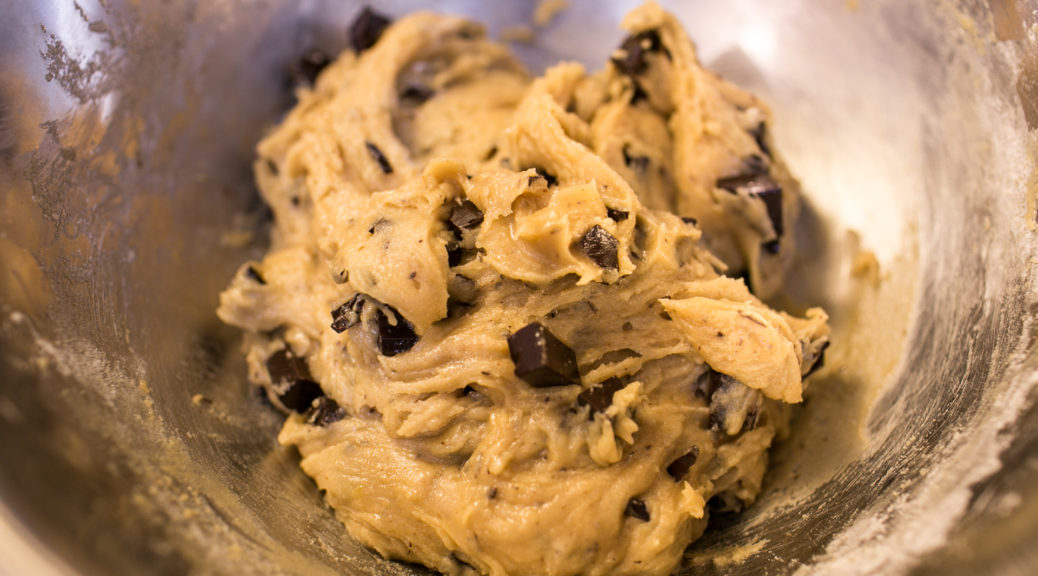
For his birthday celebration, my college roommate requested that we congregate on Zoom for a PowerPoint party and share 5-minute presentations on any topic. Concurrently, I was comparing many popular chocolate chip cookie recipes to find out what aspects these bakers all consider important. Thus, I took the opportunity to combine the projects, scripting a dense half-silly rapid-fire 38-slide 5-minute presentation on cookie baking science. Here, I’ve reformatted that presentation’s tables and script into this blog post.
If interested in the recipe I currently follow, scroll to the end.
As coronavirus (COVID-19) and its hysteria is sweeping through New York City and the US at large, people are panicking and hoarding supplies like pantry food, disinfecting wipes, face masks, and – for some reason – a whole buttload of toilet paper. I know discussing toilet paper is socially unsavory, but if you want to preserve your stash while maintaining anal hygiene, you should ensure that use your toilet paper effectively and efficiently.Continue reading How to Use Toilet Paper→
2019 has come and gone. It was the first year I was employed full-time throughout, and correspondingly the days, weeks, and months flew by when most I had to say about it were boring medical adventures and revelations that aren’t really blog-worthy. Still, I do want to maintain my tradition of public reflections, so off I go! Continue reading 2019 in Retrospect→
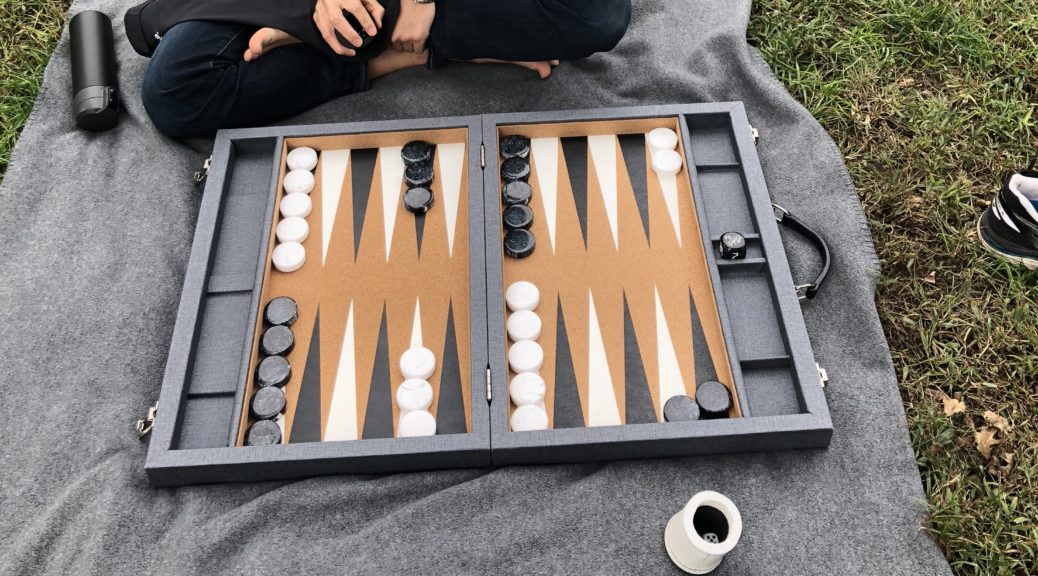
Obviously, a physical backgammon board can be beautiful. The field of tall triangles with circular checkers lying on top is an attractive geometric pattern. Backgammon’s frequently a high-end game, and fancy boards have features like exquisitely swirled Bakelite checkers, hand-stitched leather fields, alligator skin attaché cases, or other absurdities.
However, consider the beauty of backgammon’s game mechanics. Although backgammon is a simple game — able to be summarized in 160 words (see below) — the gameplay is dynamic, engaging, and potentially heartbreaking. In every facet, the elementary rules generate extraordinary emergent characteristics which, in turn, demand intricate strategical considerations, and that’s a beautiful thing.
14 days, 2050 miles of driving, 6 national parks in southern Utah and northern Arizona, and a few extra attractions. Prepare yourselves. Continue reading Red Rocks→
It’s summer in my mid-to-late 20s, so you know what that means: it’s wedding season! Being invited to take photos at three of my friends’ special days is such an honor that I’ll remember forever, and not only because I have literally thousands more photos of them than anyone else… Continue reading Wedding Season 2019→